
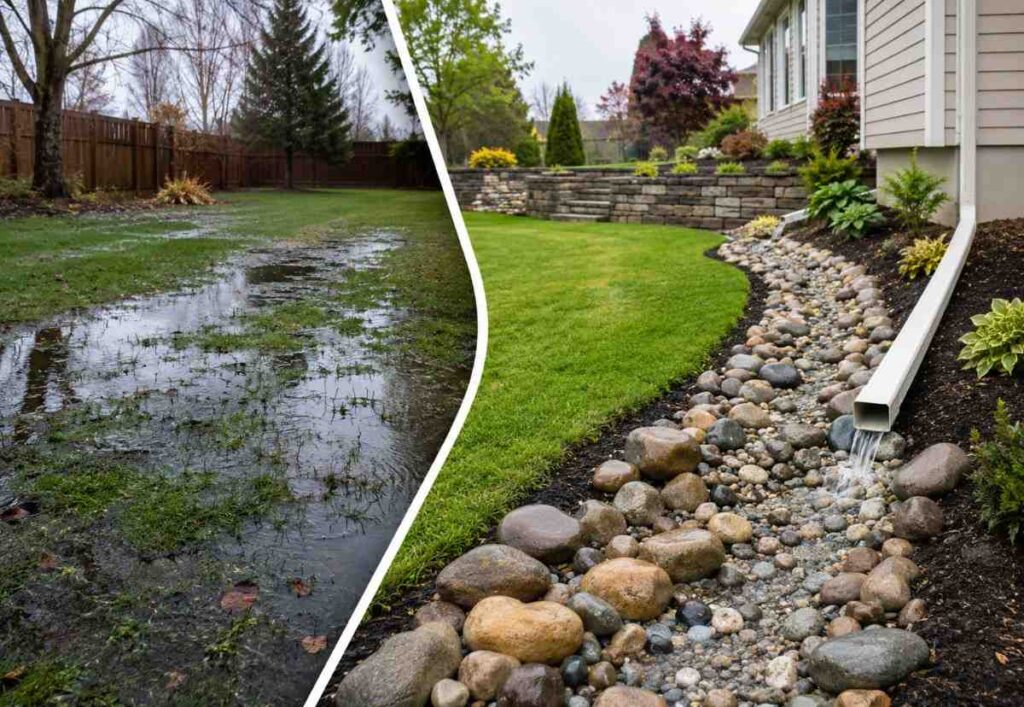
Standing water in your yard is usually caused by poor drainage, compacted soil, low spots, clogged gutters, or improper grading. The best way to stop water pooling in your yard is to improve drainage flow, redirect runoff, and restore healthy soil absorption.
If ignored, water pooling in yard areas can damage landscaping, weaken foundations, attract mosquitoes, and create long-term lawn drainage problems.
Below are 15 proven wet yard solutions homeowners use to fix backyard drainage issues permanently.
1. Regrade Your Yard for Better Water Flow
Improper yard slope is one of the leading causes of standing water. Water should naturally flow away from your home and toward safe drainage areas.
Regrading involves reshaping the soil so runoff moves efficiently. Even a slight slope adjustment can significantly reduce water pooling in yard sections that stay saturated after rainstorms.
2. Install a French Drain System
French drains are one of the most effective backyard drainage systems for redirecting underground water. They use gravel and perforated pipes to channel excess moisture away from problem areas.
This drainage method works especially well for recurring yard flooding, soggy lawns, and areas where rainwater repeatedly collects near foundations or patios.
3. Aerate Compacted Soil
Compacted soil prevents water absorption and creates severe lawn drainage problems. Aeration loosens the soil and improves water penetration into the ground.
Core aeration also helps roots grow deeper, improving lawn health while reducing standing water after heavy rainfall or irrigation.
4. Add Organic Matter to Improve Soil Drainage
Clay-heavy soil often traps moisture for long periods. Mixing compost, sand, or organic material into the soil improves drainage and boosts absorption.
Healthier soil structure allows rainwater to move naturally through the ground instead of forming puddles across your backyard drainage problem areas.
5. Extend Downspouts Away From the House
Short downspouts dump roof runoff directly near your foundation, creating yard flooding and erosion around the home.
Installing downspout extensions redirects water farther away, helping protect landscaping, foundations, and low-lying lawn drainage zones.
6. Create a Dry Creek Bed
Dry creek beds are decorative drainage channels designed to guide excess rainwater safely across the yard. They combine function with landscaping appeal.
This wet yard solution is ideal for homeowners who want to solve drainage issues while enhancing curb appeal naturally.
7. Install Catch Basins in Low Areas
Catch basins collect standing water and transfer it underground through drainage pipes. They are commonly used in areas where water repeatedly gathers after storms.
These systems help prevent muddy lawns, mosquito breeding, and structural water damage caused by persistent water pooling in yard spaces.
8. Build a Rain Garden
Rain gardens absorb excess runoff using deep-rooted plants and engineered soil layers. They naturally filter water while reducing erosion and oversaturation.
Native plants used in rain gardens thrive in wet conditions, making them ideal for sustainable backyard drainage improvement.
9. Use Gravel or Permeable Pavers
Concrete and solid surfaces block water absorption, increasing runoff and lawn drainage problems. Permeable materials allow water to soak into the ground gradually.
Replacing traditional hardscapes with gravel, permeable pavers, or porous pathways can significantly reduce standing water accumulation.
10. Clean Gutters and Drainage Pipes Regularly
Blocked gutters overflow during storms and dump water directly into the yard. Clogged underground drainage pipes can also worsen backyard drainage failures.
Routine maintenance helps keep water moving properly and prevents unnecessary flooding around your property.
For additional prevention methods, homeowners can explore these expert drainage repair tips for yards to identify hidden causes of recurring water buildup.
11. Install a Sump Pump for Severe Drainage Problems
Homes with chronic flooding or extremely wet yards may benefit from a sump pump system. These pumps remove excess water from drainage basins automatically.
Sump pumps are especially useful in areas with heavy rainfall, poor soil absorption, or frequent stormwater accumulation.
12. Create Swales to Redirect Water Naturally
Swales are shallow trenches designed to guide runoff safely away from structures and landscaping. They slow water movement and improve natural absorption.
Properly designed swales can reduce erosion while solving large-scale yard drainage concerns efficiently.
13. Remove Thatch From Your Lawn
Excessive thatch blocks water from reaching the soil, contributing to standing water and unhealthy grass growth.
Dethatching improves airflow, encourages absorption, and restores proper lawn drainage performance during rainy seasons.
14. Install Underground Drainage Pipes
Subsurface drainage systems move excess groundwater away from saturated areas underground. These systems are often paired with catch basins or French drains.
Professional installation is recommended for large backyard drainage projects involving persistent yard flooding.
15. Consult a Yard Drainage Professional
Some drainage issues involve multiple factors such as grading, runoff patterns, underground water pressure, or structural concerns.
Experienced drainage specialists can evaluate your property and recommend customized wet yard solutions that prevent long-term water damage effectively.
Why Does Standing Water Collect in Your Yard?
Standing water develops when rainwater cannot properly drain or absorb into the soil. Heavy rainfall, clay-rich soil, uneven grading, and blocked drainage systems are among the most common causes of yard flooding.
Many homeowners notice backyard drainage issues after storms because compacted soil prevents water from soaking into the ground. In other cases, runoff from roofs, driveways, or neighboring properties contributes to lawn drainage failures.
Professional contractors often recommend combining multiple yard drainage solutions for long-term protection instead of relying on temporary fixes that only move water elsewhere.
Signs Your Yard Has Serious Drainage Problems
Standing water that lasts longer than 24–48 hours may indicate major drainage issues. Persistent puddles often signal poor grading, compacted soil, or failing drainage systems.
Additional warning signs include:
- Mushy or muddy lawn areas
- Water stains near foundations
- Mosquito infestations
- Soil erosion around landscaping
- Basement moisture or leaks
- Dying grass in saturated areas
Ignoring these symptoms can lead to expensive structural repairs and landscape damage over time.
Best Long-Term Solution for Standing Water in Yards
The most effective approach combines several drainage improvements instead of relying on one quick fix. Proper grading, soil enhancement, drainage installation, and runoff management work together to eliminate backyard drainage problems permanently.
Homeowners dealing with recurring lawn drainage issues should focus on identifying the root cause rather than only removing visible water after storms.
Final Thoughts
Standing water can quickly turn a healthy yard into a muddy, damaged, and unusable space. Fortunately, most water pooling in yard areas can be corrected with proper drainage planning and preventative maintenance.
Whether you install a French drain, improve grading, add permeable surfaces, or create a rain garden, proactive drainage improvements protect your lawn, landscaping, and foundation from future damage. By choosing the right wet yard solutions, homeowners can restore a dry, healthy, and functional outdoor space year-round.