
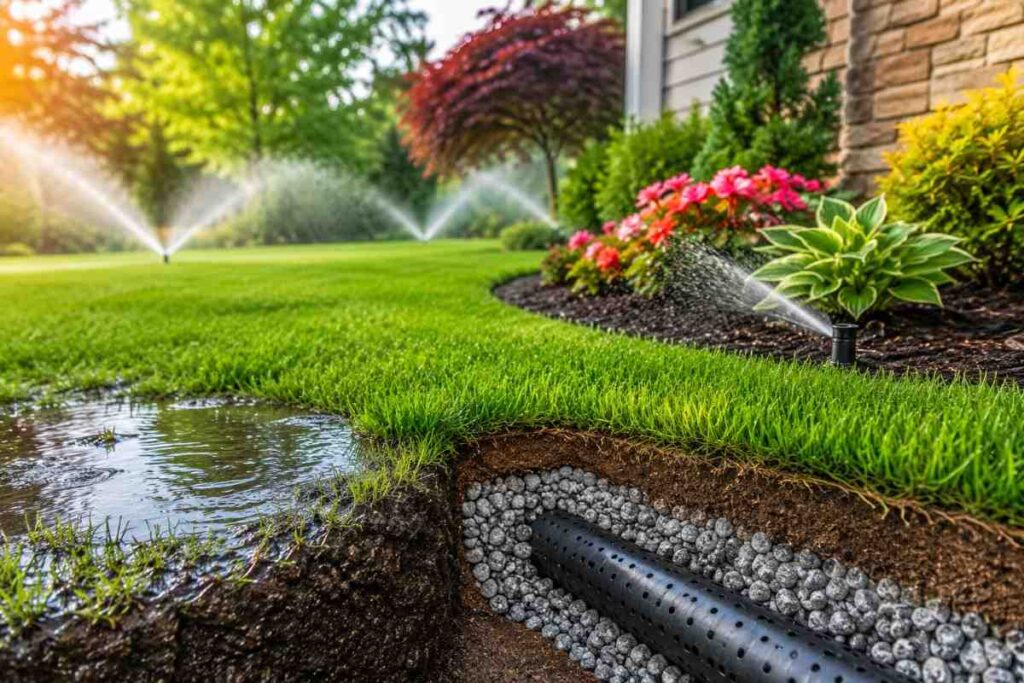
Poor lawn drainage can damage grass, create standing water, and lead to soil erosion. Smart irrigation techniques help control water flow, reduce oversaturation, and keep your yard healthy year-round while lowering water waste and maintenance costs.
A well-planned drainage and irrigation system improves soil absorption, prevents puddles, and protects your landscape from long-term water damage. Here’s how homeowners can fix lawn drainage problems with practical and smart irrigation strategies.
Why Lawn Drainage Problems Happen
Many homeowners experience lawn drainage issues because of compacted soil, improper grading, excessive watering, or poor landscape design. When water cannot move or absorb properly, it collects in low areas and weakens the lawn’s root system.
Heavy rainfall, clay soil, blocked gutters, and inefficient sprinkler systems can also increase standing water problems. Ignoring these warning signs may lead to mold growth, foundation damage, mosquito breeding, and dying grass patches.
Signs Your Lawn Has Drainage Issues
A lawn with poor drainage often shows visible symptoms after watering or rain. Identifying these signs early can help prevent expensive repairs and landscape damage.
Common signs include:
- Water pooling for hours after rainfall
- Muddy or soggy grass areas
- Yellowing or thinning turf
- Soil erosion around pathways
- Foul odors from standing water
- Increased weed and mosquito activity
If these issues continue regularly, your yard likely needs improved irrigation and drainage management.
9 Tips to Fix Lawn Drainage Issues
1. Use Smart Irrigation to Prevent Overwatering
Overwatering is one of the biggest causes of lawn drainage problems. Smart irrigation systems monitor weather conditions, moisture levels, and watering schedules to deliver the right amount of water only when needed.
Modern homeowners often invest in professional lawn drainage solutions to combine proper irrigation with effective water runoff control. This approach improves lawn health while reducing unnecessary water usage.
Smart sprinkler controllers automatically adjust watering based on rainfall and soil conditions. This prevents saturated soil and keeps grass roots stronger and healthier over time.
2. Install Rain Sensors for Better Water Control
Rain sensors stop irrigation systems from running during or after rainfall. This simple upgrade prevents excessive moisture buildup and minimizes lawn flooding.
Without rain sensors, many sprinkler systems continue watering even during storms. This wastes water and contributes to puddling, root rot, and drainage failures.
Installing rain-sensitive irrigation controls also helps lower water bills and supports environmentally responsible landscaping practices.
3. Improve Soil Absorption With Aeration
Compacted soil prevents water from soaking into the ground properly. Lawn aeration creates small holes in the soil, allowing oxygen, nutrients, and water to reach grass roots more effectively.
Aerating your lawn once or twice a year improves drainage naturally and supports healthier turf growth. This is especially important for lawns with clay-heavy soil, where water infiltration is slower.
Combining aeration with smart irrigation scheduling significantly reduces runoff and standing water problems.
4. Adjust Sprinkler Placement and Coverage
Poor sprinkler placement often causes uneven watering. Some lawn areas become oversaturated while others remain dry, leading to drainage imbalances and unhealthy grass growth.
Check your irrigation system for:
- Sprinklers spraying sidewalks or driveways
- Overlapping sprinkler coverage
- Broken or leaking sprinkler heads
- High-pressure water runoff
- Uneven watering zones
Correct sprinkler alignment helps distribute water evenly across the lawn and prevents excessive pooling in low spots.
5. Create Proper Lawn Grading
A lawn should gently slope away from your home to guide water safely toward drainage areas. Improper grading traps water near foundations and creates recurring wet spots in the yard.
Professional grading reshapes the landscape to improve runoff direction and eliminate standing water zones. Even a small slope adjustment can dramatically improve drainage performance.
This step is especially useful for homeowners dealing with persistent flooding near patios, walkways, or foundations.
6. Add French Drains for Severe Water Problems
French drains are highly effective for lawns with chronic drainage issues. These systems use gravel-filled trenches and perforated pipes to redirect excess water away from problem areas.
French drains work well in:
- Low-lying lawn sections
- Areas near foundations
- Waterlogged gardens
- Sloped properties with runoff issues
When paired with smart irrigation systems, French drains help maintain balanced soil moisture without oversaturating the landscape.
7. Use Native Plants to Reduce Water Buildup
Native plants typically require less water and adapt better to local climate conditions. Their deeper root systems also improve soil stability and water absorption.
Replacing high-maintenance grass sections with native landscaping can reduce irrigation demand and improve natural drainage throughout the property.
Ground covers, ornamental grasses, and drought-resistant plants are excellent additions for sustainable lawn drainage management.
8. Clean Gutters and Downspouts Regularly
Clogged gutters and poorly directed downspouts often contribute to lawn drainage problems. Overflowing rainwater can saturate soil near the home and create erosion issues.
To improve drainage:
- Remove leaves and debris from gutters
- Extend downspouts away from foundations
- Inspect drainage pipes for blockages
- Direct runoff toward safe drainage zones
Proper roof water management reduces stress on your lawn and prevents unnecessary soil saturation.
9. Monitor Your Lawn With Smart Moisture Sensors
Soil moisture sensors provide real-time data about ground moisture levels. These devices help homeowners avoid watering when the soil already contains enough moisture.
Smart irrigation systems connected to moisture sensors improve watering accuracy and prevent water waste. They are especially useful during seasonal weather changes when lawn watering needs fluctuate frequently.
Using data-driven irrigation methods supports healthier lawns and long-term drainage efficiency.
Seasonal Lawn Drainage Maintenance Matters
Drainage systems require regular maintenance to perform effectively throughout the year. Seasonal inspections help identify developing issues before they become costly repairs.
Homeowners should:
- Inspect drainage areas after heavy rain
- Test irrigation systems seasonally
- Remove debris from drains and grates
- Aerate compacted soil annually
- Check for standing water regularly
Routine maintenance keeps water flowing properly and protects the overall health of your landscape.
Final Thoughts
Fixing lawn drainage issues starts with smarter water management. Combining efficient irrigation practices, proper grading, soil improvement, and drainage solutions helps create a healthier and more durable lawn.
Smart irrigation technology not only prevents overwatering but also improves water conservation and reduces landscape maintenance costs. Whether you are dealing with soggy grass, pooling water, or soil erosion, proactive drainage improvements can protect your property and keep your lawn looking its best year-round.