
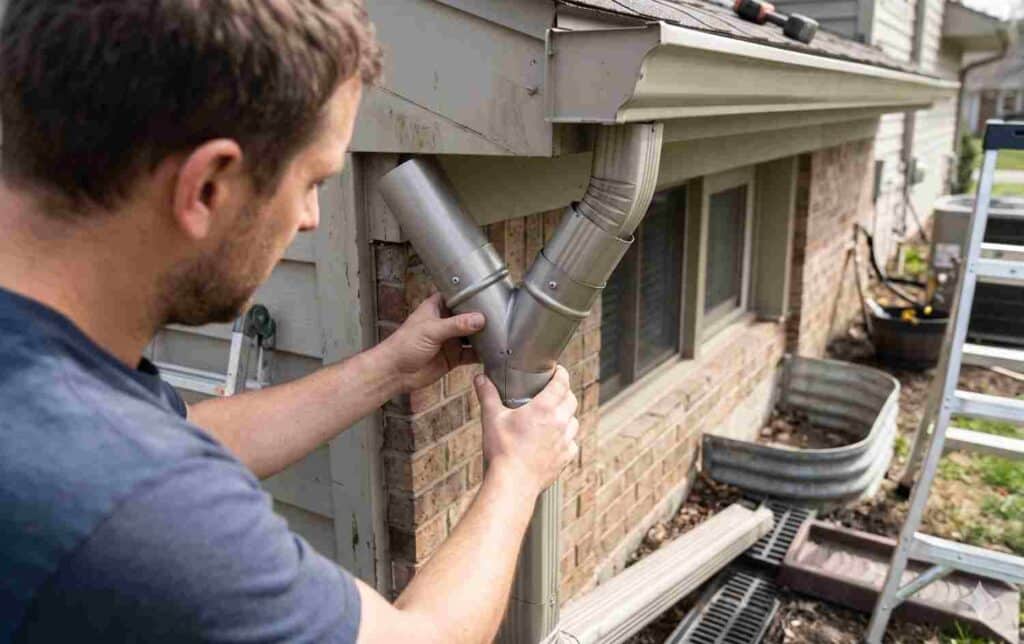
Yes, you can connect two gutter downspouts together, provided the connected drainage system is properly sized to handle the combined volume of rainwater. Homeowners can use a shared drainage pipe or underground drainage line to direct water from multiple downspouts toward a suitable discharge point. However, the pipe diameter, slope, gutter capacity, and outlet location must be considered to prevent backups, overflowing gutters, and water damage.
Connecting multiple downspouts can simplify your property’s drainage layout, reduce the number of separate discharge points, and help manage rainwater more efficiently. The key is making sure the shared system can handle the additional water without becoming overloaded.
When Does Connecting Two Gutter Downspouts Make Sense?
Connecting two downspouts can be useful when separate drainage outlets are inconvenient or when you want to direct rainwater toward one designated discharge area.
For example, homes with multiple roof sections may have downspouts positioned close together. Instead of allowing water to discharge independently, a properly designed drainage connection can collect runoff and carry it away through a shared pipe.
This arrangement can offer several advantages:
- Better water management: Directs rainwater toward a designated drainage area.
- Fewer surface outlets: Reduces the number of visible discharge points around the property.
- Improved landscaping: Helps control where roof runoff enters the yard.
- More organized drainage: Creates a coordinated system for managing water from multiple roof sections.
However, connecting downspouts is not automatically the best solution for every property.
1. Check the Combined Water Volume
The first step is understanding how much rainwater both downspouts will carry.
Each downspout collects runoff from a section of the roof. When two outlets share one drainage pipe, that pipe must accommodate the combined water flow.
Consider these factors:
- The total roof area draining into both gutters.
- The roof pitch and surface characteristics.
- Local rainfall intensity.
- The number and size of existing downspouts.
- The capacity of the shared drainage pipe.
A pipe that handles one downspout comfortably may become overwhelmed when another outlet is added.
2. Choose the Correct Drainage Pipe Size
Pipe sizing is one of the most important considerations when connecting two gutter downspouts.
A shared pipe generally needs sufficient capacity for the combined runoff. Using an undersized pipe can restrict water movement, create backups, and cause water to overflow from the gutters during heavy rainfall.
The appropriate diameter depends on the roof’s drainage area, rainfall conditions, pipe length, fittings, and applicable plumbing or drainage requirements.
Avoid assuming that simply joining two standard downspout pipes with a connector will provide adequate drainage.
3. Maintain the Proper Pipe Slope
Water needs a continuous downward path to move through a gravity-fed drainage system.
When installing a shared underground downspout pipe, maintain an appropriate slope toward the discharge point. Poor grading can allow water to collect inside the pipe, increasing the likelihood of sediment buildup, blockages, and standing water.
Before gutter installation, check the property’s elevation and determine whether gravity drainage is practical.
4. Connect the Downspouts Using Suitable Fittings
A properly designed connection helps water from both downspouts enter the shared drainage line without creating unnecessary resistance.
Depending on the layout, suitable Y-connectors or drainage fittings can combine the two outlets. A properly oriented fitting is generally preferable to an abrupt connection that causes opposing water flows.
The connection should also provide access for inspection and cleaning. This makes future gutter drainage maintenance easier.
5. Direct Water Away From Your Foundation
One of the biggest reasons for connecting gutter downspouts is to control where rainwater ends up.
However, the shared drainage line must discharge water at an appropriate location. Releasing concentrated runoff near the home’s foundation can contribute to soil erosion, basement moisture, and water intrusion.
Depending on property conditions, suitable discharge options may include an approved stormwater connection, a properly designed drainage area, or another permitted outlet.
Before choosing a discharge location, check local drainage requirements and make sure runoff will not flow onto neighboring properties.
Understand the Common Problems With Connecting Downspouts
Although connecting two downspouts can improve drainage organization, poor installation can create additional problems.
Watch out for these common issues:
- Pipe overflow: An undersized shared pipe may struggle during heavy rainfall.
- Clogged connections: Leaves, roof granules, and sediment can accumulate around junctions.
- Standing water: Incorrect pipe grading can prevent proper drainage.
- Backflow: Poorly designed connections may allow water to back up toward another downspout.
- Foundation problems: Improper discharge locations can direct excessive water toward the home.
- Difficult maintenance: Inaccessible underground connections can make blockages harder to locate and remove.
Regular inspection and proper system design can help prevent these issues.
Should You Connect Downspouts Above Ground or Underground?
Both approaches can work, depending on the property’s layout and drainage requirements.
Above-ground connections:
- Easier to inspect and maintain.
- Generally simpler to access for cleaning.
- Can be suitable when downspouts are close together.
- May be more visible around the home.
Underground connections:
- Provide a cleaner appearance around the property.
- Allow rainwater to travel toward a designated outlet.
- Can help manage runoff away from frequently used outdoor areas.
- Require proper pipe sizing, grading, and access for maintenance.
The right option depends on available space, soil conditions, property elevation, and the volume of water being collected.
How to Maintain a Connected Gutter Drainage System?
Once two downspouts share a drainage line, routine maintenance becomes especially important.
Follow these maintenance tips:
- Clean gutters regularly to prevent leaves and debris from entering the downspouts.
- Inspect visible connectors for leaks and loose fittings.
- Check that water flows freely through the shared drainage line.
- Remove debris around discharge outlets.
- Look for standing water or erosion near the discharge area.
- Arrange an inspection if gutters repeatedly overflow during rainfall.
Homes surrounded by trees or exposed to frequent heavy rainfall may require more frequent inspections.
Frequently Asked Questions
Can two downspouts share one underground drain pipe?
Yes. Two downspouts can share an underground drainage pipe if the pipe is appropriately sized for the combined runoff and has sufficient slope and a suitable discharge point.
Can connecting two downspouts cause water to back up?
Yes. An undersized pipe, clogged connection, inadequate slope, or restricted outlet can cause water to back up and potentially overflow through the gutters.
Should every gutter have its own downspout?
Not necessarily. Multiple gutters can sometimes connect to a shared drainage system. However, each roof section needs adequate drainage capacity, and the combined system must be designed to handle the expected rainfall.
How far should gutter downspouts drain water from a house?
Downspouts should discharge water far enough away to prevent pooling near the foundation. The appropriate distance depends on grading, soil conditions, local requirements, and the drainage system being used.
Final Thoughts
Connecting two gutter downspouts together is a practical drainage option when the system is properly designed and installed. The most important considerations are pipe capacity, correct fittings, adequate slope, and directing rainwater toward a safe discharge location.
Before combining downspouts, evaluate your roof’s drainage requirements and the existing gutter system. A well-planned setup can help manage runoff, reduce drainage problems, and protect your property from unnecessary water damage.