
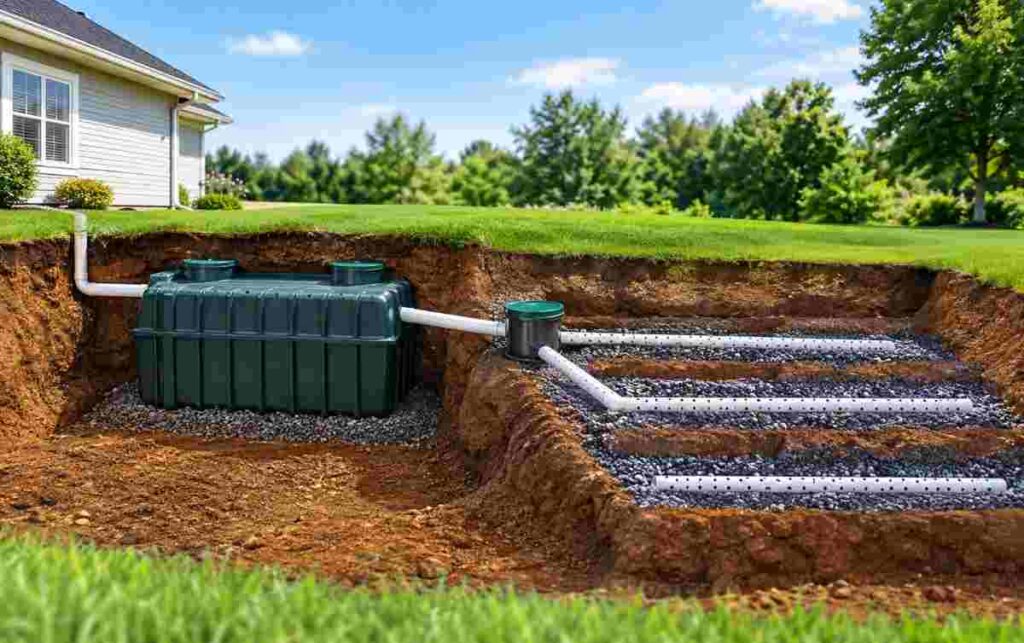
Installing a septic tank and drainage field requires careful site evaluation, proper system design, permitting, excavation, pipe installation, and inspection. The septic tank separates solids from wastewater, while the drainage field—also called a drain field or soil absorption field—distributes treated effluent into suitable soil for further treatment. Because septic systems affect groundwater and public health, installation should follow local regulations and be completed by qualified professionals.
For homeowners, the most important first step is not digging the tank or drainfield yourself. Start with a property evaluation, soil/site assessment, approved septic system design, and the required local permit.
How Does a Septic Tank and Drainage Field Work?
A conventional septic system has four primary components:
- A wastewater pipe from the home
- A watertight septic tank
- A distribution system and drainage field
- Suitable soil for final wastewater treatment
Wastewater leaves the house and enters the septic tank. Heavy solids settle to the bottom as sludge, while fats, oils, and grease float to the top as scum. The liquid effluent then leaves the tank and moves into the drainfield, where it is distributed through pipes and gradually absorbed into the soil. Soil and microorganisms provide additional treatment before the water reaches groundwater.
1. Check Local Septic Regulations and Permits
Before planning a septic tank installation, determine which authority handles septic permits in your area.
In Florida, onsite sewage treatment and disposal systems are commonly called OSTDS. The permitting process depends on the county. Florida has been transitioning septic program responsibilities between the Department of Environmental Protection and local county health departments, so homeowners should verify the current requirements for their specific property.
Depending on the property and system, you may need:
- A construction permit
- Site evaluation
- Property/site plan
- Building floor plan
- Septic system design
- Required inspections
- Local approvals or additional permits
Florida also notes that a state OSTDS permit does not eliminate applicable local requirements, ordinances, or approvals.
Do not begin excavation until the required approvals are confirmed.
2. Conduct a Professional Site and Soil Evaluation
The location of the septic tank and drainage field is one of the most important decisions in the entire project.
A site evaluation considers factors such as:
- Soil characteristics
- Groundwater conditions
- Property slope and topography
- Available drainfield area
- Flooding conditions
- Existing structures
- Wells and water sources
- Property boundaries
- Required setbacks
The soil must be capable of accepting and treating wastewater. A conventional drain field may not be appropriate where soil, groundwater, space, or site conditions do not meet requirements. In those situations, an alternative septic system may be necessary.
Why soil testing matters
A drain field that is installed in unsuitable soil can fail even when the septic tank itself is functioning properly. Poor soil absorption can result in standing wastewater, sewage surfacing, plumbing backups, odors, and premature system failure.
3. Choose the Correct Septic Tank Size and System Design
The septic tank must be appropriately sized for the property’s expected wastewater flow and the approved system design.
Common septic tank materials include:
- Concrete
- Fiberglass
- Polyethylene
The tank must be watertight and designed to retain solids while allowing clarified effluent to leave through the outlet. A properly designed outlet arrangement helps prevent sludge and scum from entering the drain field.
The drainage field must also be sized and configured according to the approved site evaluation and applicable regulations.
4. Plan the Septic Tank Location
The tank should be positioned where the home’s wastewater can reach it effectively while maintaining required separation distances from buildings, wells, property boundaries, water features, and other regulated areas.
The plumbing leaving the home often influences the tank location and pipe elevation because the system needs appropriate flow between components.
The tank should also remain accessible for inspection and future pumping.
A common professional improvement is installing accessible risers and properly secured lids so technicians can locate and service the tank without unnecessary excavation.
5. Excavate and Prepare the Septic Tank Area
After the system design and permit are approved, excavation can begin according to the approved plans.
The installation team typically:
- Marks the approved tank location.
- Establishes required elevations.
- Excavates the tank area.
- Prepares a stable installation base.
- Places the septic tank correctly.
- Connects the inlet and outlet piping.
- Verifies alignment and elevation.
- Completes required inspection steps before final backfilling.
Heavy equipment should be operated carefully around the future drain field because excessive soil compaction can reduce the soil’s ability to accept wastewater. EPA guidance specifically identifies heavy equipment and poor installation practices as potential causes of drain field problems.
6. Install the Drain field
The drain field is where the septic system completes an important part of the wastewater treatment process.
Depending on the approved design, a conventional system may use trenches containing perforated distribution pipes and appropriate aggregate or an approved alternative system. Effluent must be distributed evenly through the designated absorption area.
The installation generally involves:
- Marking the approved drain field area
- Excavating trenches or the approved absorption area
- Maintaining required elevations
- Installing distribution piping
- Connecting the system to the septic tank
- Installing approved aggregate, chambers, or other components
- Protecting the soil from unnecessary compaction
- Completing required inspections
- Covering the system according to the approved design
Drain field installation is not simply digging trenches and burying perforated pipe. Drainage capacity, soil conditions, elevation, distribution, groundwater separation, and regulatory requirements all affect system performance.
7. Protect the Drain field From Excess Water
One of the most overlooked parts of septic system installation is protecting the drain field from additional water.
Keep these sources away from the drain field:
- Roof runoff
- Downspout discharge
- Sump pump discharge
- Irrigation runoff
- Surface drainage
- Concentrated stormwater
Excess water can overload the drain field and interfere with wastewater treatment.
This is especially important in areas that experience heavy rainfall. A properly designed yard drainage system can help control surface water without directing unnecessary runoff into the septic absorption area.
If your property has standing water or recurring drainage problems, review your options for professional drain installation services before those problems affect your septic system.
8. Complete Inspection and Backfilling
Before the system is covered, required inspections should be completed.
The inspection verifies that the installation follows the approved design and applicable requirements. Once the system passes the required inspection, the excavation can be backfilled according to the installation specifications.
Avoid driving vehicles or placing heavy structures over the drainfield. Compacted soil can reduce infiltration and damage underground components.
Common Septic Installation Mistakes to Avoid
Poor installation can shorten the life of a septic system and create expensive repair problems.
Avoid:
- Installing without the required permit
- Skipping the site or soil evaluation
- Choosing a tank size without professional design
- Installing the drain field in unsuitable soil
- Incorrectly leveling distribution pipes
- Allowing stormwater into the drain field
- Driving heavy equipment over the absorption area
- Planting trees directly over the drain field
- Building patios or structures over the system
- Ignoring required inspections
- Treating the septic system as a regular stormwater drain
EPA guidance recommends keeping vehicles away from drain fields, controlling excess water, and avoiding trees and shrubs whose roots can damage septic components.
Septic Tank vs. Drainage Field: What Is the Difference?
The septic tank primarily separates and retains solids while allowing partially treated wastewater to continue through the system.
The drainage field receives that liquid effluent and allows it to disperse through suitable soil for additional treatment.
Both components must work together. A properly functioning septic tank cannot compensate for a poorly designed or overloaded drain field, and a well-designed drain field cannot function properly if excessive solids are allowed to leave the tank.
Final Takeaway
A successful septic tank and drainage field installation starts with site evaluation, proper design, permitting, correct installation, inspection, and long-term maintenance. The septic tank manages solids and wastewater separation, while the drainfield relies on suitable soil to complete wastewater treatment.
If you are experiencing standing water, drainage backups, wet soil, or other water-management problems around your property, addressing the drainage issue early can help prevent more expensive damage. WeatherTek provides drainage inspection, repair, and installation services for residential and commercial properties in its Jacksonville-area service region.
FAQs
Can I install a septic tank and drainfield myself?
Septic installation involves permitting, site evaluation, system design, excavation, wastewater treatment requirements, and inspections. Homeowners should work with qualified professionals and follow their local regulations rather than treating the project as a typical DIY drainage installation.
How deep should a septic drainfield be?
There is no universal depth that applies to every property. Drainfield depth and configuration depend on the approved system design, soil characteristics, groundwater conditions, site elevation, and applicable regulations.
What happens if a drain field is installed incorrectly?
An improperly installed drainfield can distribute wastewater unevenly, become overloaded, suffer from poor infiltration, or allow wastewater to surface. Poor installation and soil compaction can contribute to system failure.
Can rainwater drain into a septic drainfield?
Rainwater and concentrated stormwater should generally be kept away from the drainfield. Additional water can overload the soil absorption area and interfere with wastewater treatment.