
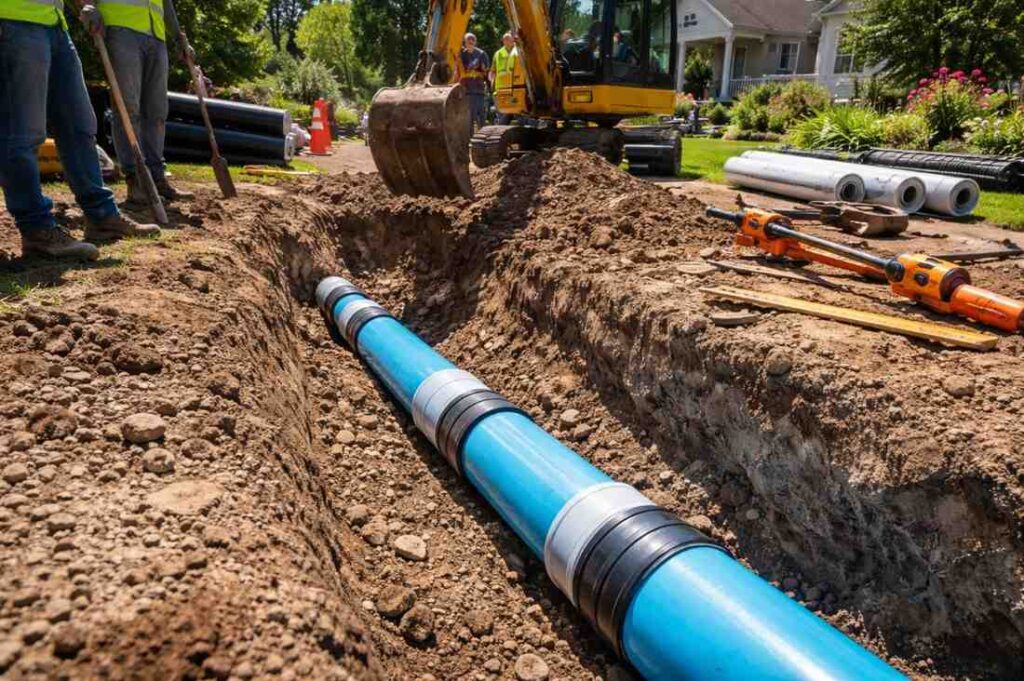
Sewer line replacement is the process of removing damaged underground pipes and installing new ones to restore proper wastewater flow. It prevents recurring backups, foul odors, and costly property damage when repairs are no longer effective.
What Is Sewer Line Replacement and When Is It Needed?
Sewer line replacement involves removing or rehabilitating damaged pipes that carry wastewater from your home to the municipal system or septic tank. It becomes necessary when repairs fail or damage is extensive.
Sewer issues often begin subtly but worsen over time. Cracks, corrosion, tree root intrusion, and aging materials can compromise your plumbing system. Homeowners typically notice slow drains, frequent clogs, or unpleasant odors. When these symptoms persist despite repeated fixes, full sewer pipe replacement becomes the most reliable solution.
Common Signs Your Sewer Line Needs Replacement
Persistent drainage issues, sewage odors, soggy patches in your yard, and frequent backups are strong indicators of a failing sewer line. Recognizing these early can help prevent severe structural damage and costly emergencies.
If you’re unsure, reviewing expert resources like signs you need drain replacement or signs of failing drain line can help you confirm whether your issue requires immediate attention.
Why Professional Sewer Line Replacement Matters
Sewer line replacement is complex and requires proper diagnosis, permits, and specialized equipment. Attempting DIY fixes can worsen the issue and increase long-term costs.
This is why it’s essential to hire a professional drain replacement contractor who understands soil conditions, local codes, and modern techniques like trenchless sewer line installation. Licensed sewer contractors ensure compliance, safety, and long-lasting results, especially for residential sewer line repair projects.
Step-by-Step Sewer Line Replacement Process
The sewer line replacement process follows a structured approach to ensure efficiency, minimal disruption, and long-term durability. Understanding each step helps homeowners feel more confident during the project.
1. Initial Inspection and Diagnosis
A professional inspection using camera technology identifies the exact location and severity of the damage. This helps determine whether a full replacement or pipe relining solution is required.
Experts insert a waterproof camera into the pipeline to inspect cracks, blockages, or collapsed sections. This step is crucial for accurate planning and avoids unnecessary excavation or guesswork.
2. Choosing the Right Replacement Method
Depending on the condition of the pipe, professionals recommend either traditional excavation or trenchless sewer line replacement. Each method has its own benefits based on property layout and damage severity.
Traditional methods involve digging trenches to access the pipe, while trenchless solutions like pipe relining or pipe bursting minimize disruption. Homeowners often prefer trenchless sewer line techniques because they preserve landscaping and reduce labor costs.
3. Permits and Preparation
Before starting the replacement, contractors secure necessary permits and mark utility lines to prevent accidents. Proper preparation ensures compliance with local regulations and safety standards.
This stage may also involve notifying local authorities and planning access points. Preparing the site helps streamline the process and prevents unexpected delays during plumbing sewer replacement.
4. Excavation or Access Point Creation
In traditional sewer pipe replacement, trenches are dug to expose the damaged pipe. For trenchless methods, small access points are created instead of full excavation.
Excavation allows complete visibility of the pipe but may disrupt landscaping, driveways, or sidewalks. In contrast, trenchless sewer line methods reduce surface damage, making them a popular choice for modern homeowners.
5. Removing the Old Sewer Line
The damaged pipe is carefully removed or broken apart, depending on the replacement method. This step ensures that all compromised sections are eliminated before installing new materials.
In pipe bursting, the old pipe is fractured while a new one is simultaneously pulled into place. This innovative approach speeds up the process and reduces the need for extensive digging.
6. Installing the New Sewer Line
New pipes are installed using durable materials like PVC or HDPE, designed to resist corrosion, root intrusion, and long-term wear. Proper installation ensures smooth wastewater flow and longevity.
The new system is aligned carefully to maintain proper slope and connection with the existing plumbing system. This step is critical for preventing future drainage issues and ensuring optimal performance.
7. Testing and Quality Check
After installation, the new sewer line is tested to ensure there are no leaks, blockages, or alignment issues. This guarantees the system is functioning correctly before finalizing the project.
Contractors may perform water flow tests and camera inspections to confirm quality. This step provides peace of mind and ensures your drain line replacement meets industry standards.
8. Backfilling and Site Restoration
Once testing is complete, trenches are filled, and the site is restored to its original condition. Landscaping, driveways, or sidewalks are repaired as needed.
Trenchless methods require minimal restoration, while traditional methods may involve more extensive repairs. Either way, professional contractors ensure your property looks as good as new after the project.
Trenchless vs Traditional Sewer Line Replacement
Trenchless sewer line replacement is less invasive and faster, while traditional methods are better for severely damaged or collapsed pipes. Choosing the right option depends on your property and pipe condition.
Trenchless solutions like pipe relining create a new pipe within the existing one, making them ideal for minor to moderate damage. Traditional excavation, however, is necessary when pipes are completely collapsed or misaligned.
Cost Factors in Sewer Line Replacement
The cost of sewer pipe replacement varies based on pipe length, depth, material, labor, and method used. Understanding these factors helps homeowners plan their budget effectively.
Trenchless sewer line methods may have higher upfront costs but save money on restoration. Traditional methods might be cheaper initially but can increase costs due to landscaping repairs.
How to Prevent Future Sewer Line Issues
Regular maintenance, proper waste disposal, and timely inspections can extend the lifespan of your sewer system. Preventive care reduces the likelihood of recurring sewer backup solutions.
Avoid flushing non-biodegradable items, monitor tree root growth, and schedule periodic inspections. These simple steps can protect your plumbing system and reduce the need for frequent residential sewer line repair.
Final Thoughts: Is Sewer Line Replacement Worth It?
Sewer line replacement is a long-term investment that ensures a safe, efficient, and reliable plumbing system. It eliminates recurring issues and protects your property from costly damage.
By understanding the process, recognizing warning signs, and working with licensed sewer contractors, you can make informed decisions. Whether you choose trenchless sewer line technology or traditional methods, timely action is the key to maintaining a healthy home environment.