
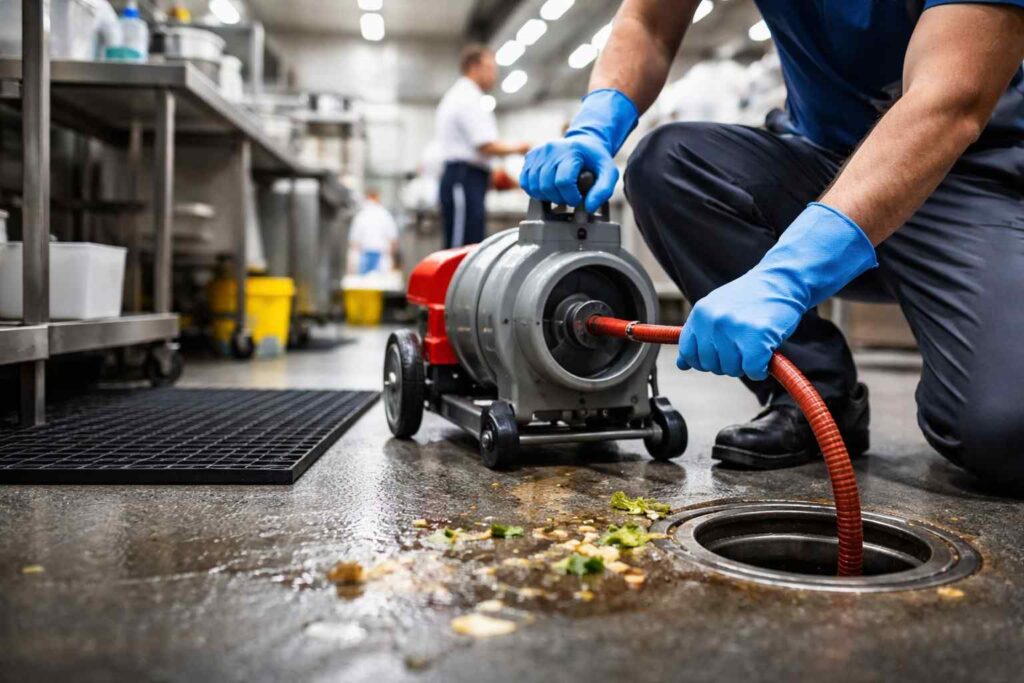
Commercial drains in restaurants should typically be cleaned every 1–3 months, depending on kitchen volume, grease output, and local regulations. High-traffic kitchens may require monthly or even bi-weekly maintenance to prevent costly backups and health violations.
Why Regular Drain Cleaning Is Critical for Restaurants
Restaurant drains handle grease, food waste, and detergents daily, making them prone to clogs and buildup. Regular cleaning ensures hygiene, prevents foul odors, and keeps your commercial plumbing system running efficiently.
In busy commercial kitchens, neglecting drains can quickly lead to backups that disrupt operations. Beyond inconvenience, clogged drains may violate health codes and damage your reputation. Consistent maintenance is a proactive investment in business continuity.
Recommended Restaurant Drain Cleaning Frequency
Most restaurants should schedule professional drain cleaning every 1–3 months. However, fast-paced kitchens, such as fast food or buffet-style establishments, often need more frequent service due to higher grease and food waste output.
Low-volume restaurants might extend cleaning intervals slightly, but routine inspection is still essential. Understanding your kitchen’s usage patterns helps determine the right restaurant drain cleaning frequency for optimal performance.
Factors That Influence Cleaning Frequency
Several factors determine how often restaurant drains need cleaning, including kitchen size, menu type, and daily traffic. Grease-heavy menus and fried foods significantly increase the risk of buildup in restaurant drains.
Another key factor is staff practices. Poor waste disposal habits can accelerate clog formation, while proper training can reduce strain on your commercial plumbing system and extend the time between cleanings.
Signs Your Restaurant Drains Need Immediate Cleaning
Slow drainage, unpleasant odors, and frequent backups are clear indicators that your drains require attention. Ignoring these warning signs can lead to severe plumbing issues and costly repairs.
If you notice recurring clogs despite regular maintenance, it may be time to use a commercial drain cleaner or consult experts for deeper cleaning solutions. Early action prevents major disruptions.
Preventive Maintenance for Commercial Kitchens
Preventive maintenance is the backbone of efficient commercial drain maintenance for restaurants. Simple practices like scraping plates, using grease traps, and avoiding oil disposal in sinks can significantly reduce buildup.
Routine cleaning schedules combined with staff training create a strong defense against plumbing issues. Investing in preventive care minimizes emergency repairs and keeps your kitchen compliant with health standards.
Role of Professional Commercial Plumbing Services
Professional commercial plumbing services provide advanced tools and expertise to thoroughly clean and inspect drain systems. Techniques like hydro jetting and camera-based drain line inspection ensure deeper and more effective cleaning.
Experts can also identify hidden issues within your commercial plumbing system before they escalate. Partnering with professionals ensures long-term efficiency and compliance with local regulations.
How Grease Traps Impact Drain Cleaning Needs
Grease traps play a vital role in reducing fats, oils, and grease (FOG) entering your drains. However, they require regular cleaning themselves—typically every 1–3 months—to remain effective.
When grease traps are neglected, excess grease flows into pipes, increasing the need for frequent drain cleaning. Maintaining both systems together ensures optimal performance and fewer plumbing emergencies.
Health and Compliance Considerations
Health departments often require strict sanitation standards in commercial kitchens, including proper drain maintenance. Failing to meet these standards can result in fines, closures, or negative inspections.
Regular drain cleaning helps prevent bacterial growth, foul odors, and pest infestations. Staying compliant not only protects your business legally but also ensures a safe environment for staff and customers.
Cost Benefits of Routine Drain Cleaning
Routine drain cleaning is far more cost-effective than emergency repairs or system replacements. Preventive maintenance reduces downtime, extends the lifespan of your plumbing, and avoids unexpected expenses.
Investing in scheduled cleaning also improves kitchen efficiency. Smooth drainage systems support faster operations, helping your staff focus on delivering quality service without interruptions.
Best Practices for Maintaining Restaurant Drains
Establishing clear maintenance protocols is essential for long-term success. Daily cleaning routines, weekly inspections, and monthly professional servicing create a comprehensive approach to drain care.
Educating staff on proper waste disposal and monitoring drain performance ensures consistency. Combining these practices with professional support leads to a reliable and efficient drainage system.
For deeper insights into why proactive maintenance matters, explore this detailed guide on
why Florida restaurants can’t ignore drain issues.
Final Thoughts: Finding the Right Cleaning Schedule
There is no one-size-fits-all answer, but most restaurants benefit from cleaning their drains every 1–3 months, with adjustments based on usage and kitchen type. High-volume operations should consider more frequent servicing.
By prioritizing regular maintenance, leveraging professional expertise, and following best practices, restaurant owners can ensure smooth operations, maintain hygiene standards, and avoid costly disruptions. A well-maintained drainage system is essential for the long-term success of any commercial kitchen.