
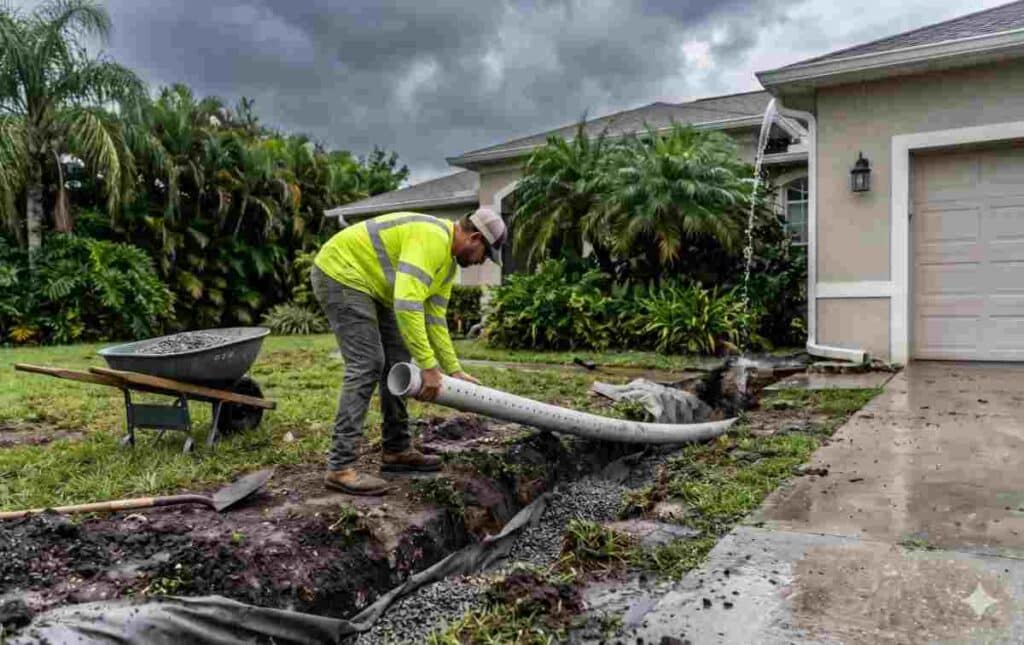
Proper drain installation is essential during Florida storm season because it helps move excess rainwater away from homes, foundations, lawns, driveways, and commercial properties. In Jacksonville, heavy rainfall can overwhelm poorly designed drainage systems, causing standing water, soil erosion, landscape damage, and potential water intrusion. A correctly installed drainage system manages runoff efficiently, reduces flooding risks, and helps protect your property throughout the rainy season.
Why Is Drain Installation Important During Florida Storm Season?
Florida’s storm season brings intense downpours, thunderstorms, tropical systems, and periods of prolonged rainfall. When rainwater cannot drain efficiently, it may accumulate around buildings, collect in low areas of the yard, or flow toward vulnerable parts of a property.
Proper drainage installation helps control this water before it creates larger problems. The right solution depends on your property’s grading, soil conditions, roof runoff, and existing drainage infrastructure.
1. Helps Prevent Yard Flooding and Standing Water
One of the most common drainage problems in Jacksonville is water collecting in lawns, gardens, and low-lying areas after heavy rain. Standing water can make outdoor spaces unusable and damage grass, plants, and landscaping.
A properly designed yard drainage system can redirect excess water toward a suitable discharge point. Depending on the property’s needs, solutions may include French drains, channel drains, catch basins, or underground drainage pipes.
2. Protects Your Home’s Foundation
Water that repeatedly collects near a home’s foundation can increase moisture exposure and contribute to soil movement, cracks, and water intrusion. Poor drainage may also allow runoff to enter crawl spaces or other vulnerable areas.
Proper drain installation helps move water away from the building rather than allowing it to pool against exterior walls. Correct grading, well-positioned downspout extensions, and suitable drainage channels can all contribute to better water management.
3. Reduces Soil Erosion and Landscape Damage
Fast-moving stormwater can wash away topsoil, expose plant roots, disturb mulch, and create channels across lawns. Over time, erosion can change the landscape’s natural slope and make drainage problems worse.
A suitable drainage system controls the direction and movement of runoff. For properties with recurring erosion, a combination of grading improvements, landscape drainage solutions, and erosion-control measures may provide better results than a single drain.
4. Improves Driveway and Walkway Drainage
Water accumulating on driveways, patios, and walkways can create slippery surfaces, damage landscaping along the edges, and contribute to premature deterioration.
Channel drains and appropriately positioned catch basins can collect surface runoff before it spreads across paved areas. Proper installation is important because drain placement, slope, capacity, and outlet location determine how effectively water moves through the system.
5. Supports Commercial Property Protection
Commercial properties often have large roofs, parking lots, loading areas, and paved surfaces that generate substantial runoff during intense storms. Inadequate drainage can disrupt operations, affect access, and expose buildings and equipment to water damage.
Businesses may need a combination of surface drains, underground piping, stormwater management features, and routine maintenance. Property owners can also review these common commercial drainage problems to understand warning signs and identify areas that may require professional attention.
When recurring flooding, poor drainage, or failing pipes affect your property, working with a qualified drain installation provider in Jacksonville can help you identify the cause and choose a drainage solution suited to local rainfall and site conditions.
6. Helps Prevent Drainage System Failures
Installing a drain is not simply a matter of digging a trench and laying a pipe. Incorrect slope, undersized piping, poor connections, unsuitable materials, and blocked outlets can prevent water from flowing as intended.
Before installation, drainage professionals should evaluate:
- The property’s natural slope and low spots.
- The amount of runoff generated during heavy rainfall.
- Soil conditions and water infiltration.
- Existing gutters, downspouts, and drainage lines.
- Pipe capacity and the location of a lawful discharge point.
These considerations help ensure that the system addresses the actual drainage problem instead of simply moving water to another troublesome area.
Which Drainage System Is Right for Your Property?
Different drainage systems solve different problems. Choosing the right one starts with understanding where water collects and how it travels across your property.
- French drains: Collect subsurface water and help relieve saturated soil in suitable locations.
- Channel drains: Capture surface water across driveways, patios, and other paved areas.
- Catch basins: Collect surface runoff and direct it into connected drainage pipes.
- Yard drains: Help manage water pooling in low areas of lawns and landscaped spaces.
- Downspout drainage: Carries roof runoff away from the house through properly routed extensions or underground pipes.
Not every property needs all these systems. A professional assessment can help determine whether one solution or a combination of drainage improvements is appropriate.
Common Drain Installation Mistakes to Avoid
DIY drainage projects can become ineffective when important site conditions are overlooked. Common mistakes include:
- Installing pipes without adequate slope.
- Choosing a drain that cannot handle the expected runoff.
- Ignoring existing underground utilities.
- Directing water toward neighboring properties or building foundations.
- Failing to provide an appropriate outlet.
- Neglecting sediment, leaves, and other debris that can block drains.
Review these common mistakes in DIY drain installation before starting a project. Understanding these issues can help property owners make informed decisions and avoid preventable installation problems.
When Should You Install or Repair Your Drainage System?
The best time to address drainage problems is before the next major storm, rather than waiting until flooding occurs. Warning signs include persistent puddles, overflowing surface drains, water entering a garage or crawl space, soil erosion, and repeated pooling near the foundation.
Inspect your property after heavy rainfall to identify where water collects and whether existing drains are working properly. Remove accessible debris from drain grates and gutters, and arrange a professional inspection if water continues to accumulate.
Final Thoughts
Proper drain installation is an important part of preparing Jacksonville properties for Florida’s storm season. A well-planned drainage system helps manage heavy rainfall, reduce standing water, limit erosion, and protect vulnerable areas around homes and commercial buildings.
By choosing the right drainage solution, ensuring correct installation, and maintaining the system regularly, property owners can reduce preventable water-related problems. If your yard floods after every storm or water collects near your foundation, addressing the drainage issue before the next downpour is a practical step toward protecting your property.